


to find it.
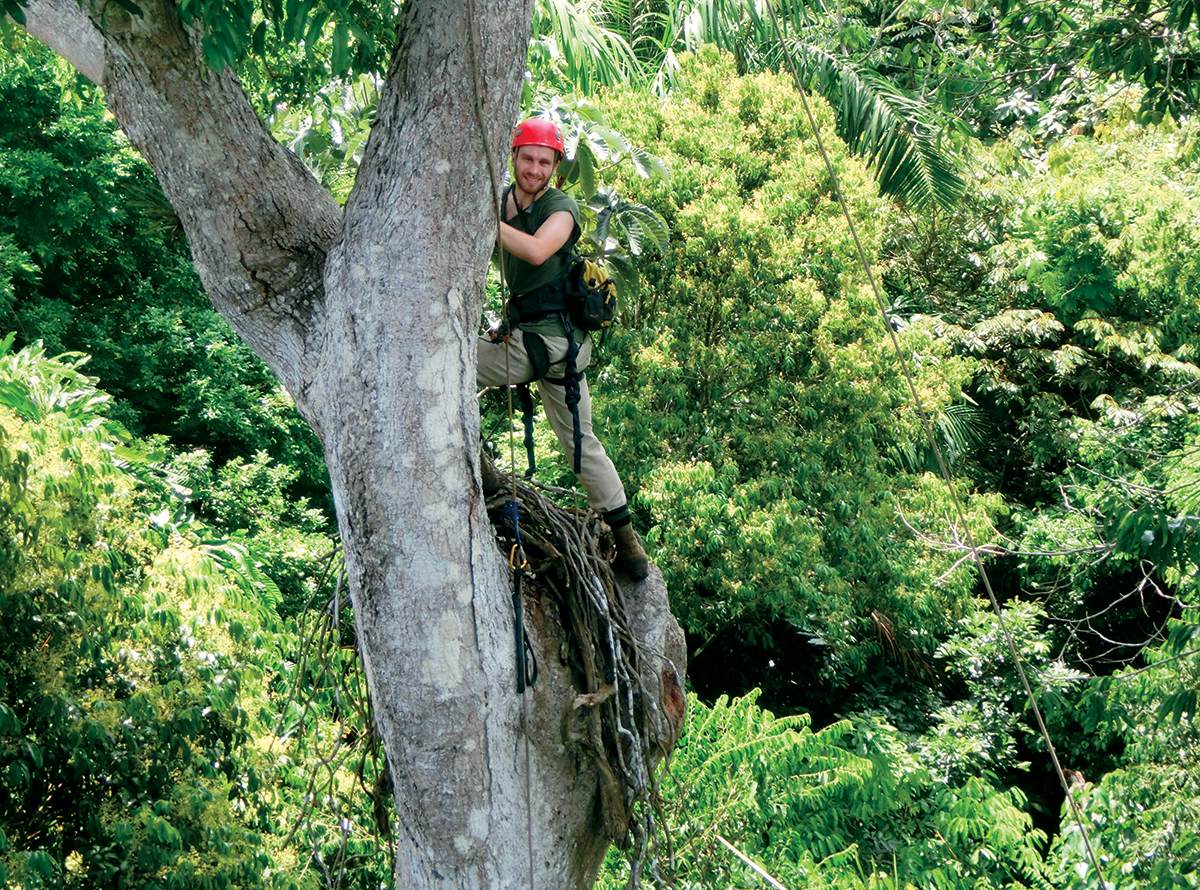
Perched high on a limb of a tree above the rainforest floor, Dr. Steve Yanoviak places a little piece of bait on a branch and patiently waits for ants听to find it. He collects them quickly and logs the results听for research. Meticulously, and painstakingly, Yanoviak continues this process over and over.
Yanoviak is curious about what happens to ants when they听fall nearly 100 feet to the forest floor below him. When curiosity gets the best of him, he gingerly flicks one off. What happens next is something he never expected.
Fueling a Fire
Yanoviak expected the ant to hurtle toward the debris, leaves and undergrowth, but instead, the ant glided left and right, homing in on the tree from which it was just launched into the air. This sparked an interest in Yanoviak that he couldn鈥檛 shake. And when the same occurrence happened with more ants in a different forest several years later, he had to find out why.
That kind of inquisitive nature led Yanoviak down a scientific path from an early age. He had always shown a keen interest in insects, and his parents encouraged the entomological inclination throughout his primary and secondary education. So when the time came for Yanoviak to pursue an academic career, he took full advantage of his lifelong interest and passion for scientific exploration, and he earned a PhD in zoology from the University of Oklahoma.
In 2012, Yanoviak joined UofL as the Tom Wallace Endowed Chair of Conservation in the
College of Arts & Sciences, where he currently teaches several courses related to biology and ecology. When he鈥檚 not in the classroom, Yanoviak is in the field, observing species in their natural habitats, collecting data and overseeing a team of undergraduate and graduate students.
The field is where Yanoviak feels most comfortable.
鈥淚 consider myself a community ecologist.听I investigate the biology behind a certain community,鈥� said Yanoviak. 鈥淎nd I love doing fieldwork. I love being in the forest.鈥�
A Work of Passion
Defining a community ecologist is like describing a Renaissance man. When it comes to researching tropical forests, there are so many actors and scenes in play that it takes a special sort of scientist, one like Yanoviak, to bring it all together.
鈥淪teve is like an idea factory. He has so many good ideas, so he鈥檚 able to reach out to different students or post-docs that do varied things and build a team. In our lab, we all have a common thread 鈥� and that鈥檚 the forest canopy,鈥� said Max Adams, a graduate student in Yanoviak鈥檚 lab.
While the high-reaching canopy sets the stage for their research, the UofL team assembled by Yanoviak has different areas of expertise.

Yanoviak still studies how ants glide and has become the leading expert in the area. He鈥檚 even branched off this focus to study how some species of ants have adapted to have the ability to swim. And because ants are found on every continent but Antarctica, the world has become his lab. He鈥檚 conducted research in a number of places, including Africa and South America, and he鈥檚 published numerous papers and has spoken at esteemed scientific conferences around the globe.
Like Yanoviak, Adams has always had a fascination with insects 鈥� particularly ants. After carefully following Yanoviak鈥檚 career and research, Adams chose to follow Yanoviak at UofL to complete his PhD. 鈥淚鈥檝e studied ants since I was six, and my hobby is climbing. Coming here to study under Steve was a perfect match.鈥�
Adams researches lianas, which are vine-like structures that flow from tree to tree. Primarily, he鈥檚 determining how lianas function as highways for ants and how species vary in the forest canopy depending on how lianas connect trees.
Evan Gora, another graduate student, also respected Yanoviak鈥檚 work enough to choose UofL as his place of research. 鈥淎s an undergraduate, I worked with a renowned forest ecologist who introduced me to Steve, and we ended up publishing a paper together.鈥�
Gora鈥檚 research focuses on how lightning affects the trees in the tropics, which is part of a relatively new direction that Yanoviak has been developing over the past three years. There鈥檚 still not an understanding of how lightning functions ecologically. Researchers like Yanoviak and Gora are learning that, in some instances, what is thought to be the death of a tree brought about by disease is actually caused by lightning 鈥� and lianas may act as natural lightning rods.
Dr. Alyssa Stark, a post-doctoral associate, jumped at the chance to join Yanoviak鈥檚 team. Stark met Yanoviak at a Society of Integrative and Comparative Biology conference in early 2014.
鈥淪teve offered me something different. He offered me fieldwork. And this position gives me a chance to talk to a strong field biologist in a lab that鈥檚 focused on bringing in interesting ideas that fall outside my background.鈥澨�听
Research 101
While Yanoviak allows his graduate and post-doc members to focus on their own research, he鈥檚 keen on introducing undergraduate students to his field of study.
鈥淚 got my start in professional science as a lab tech washing glassware, helping enter data and helping collect data. For me, it was valuable because it made me feel like I was part of the culture, and a lot of being a productive scientist is understanding the culture,鈥� said Yanoviak.
Noah Gripshover, a sophomore biology major with a focus on ecology, works as a tech in Yanoviak鈥檚 lab and will travel with the team on a fieldwork expedition this summer.
鈥淏eing able to learn about ecology from different perspectives is exciting,鈥� Gripshover said. 鈥淲orking with Dr. Yanoviak is easy to me because I鈥檓 doing something I like, but I didn鈥檛 think I鈥檇 be working with ants. That鈥檚 exciting.鈥�
Yanoviak鈥檚 position on including undergraduates in fieldwork is echoed by Gora, who brings Gripshover along for locally based experiments. 鈥淔ield research as an undergraduate is huge. It influenced the trajectory of my life. I did research for a summer as an undergraduate, and I found out very quickly that this was where I wanted to go.鈥�
An Influential Network
When Yanoviak came to UofL, he brought not only a wealth of experience and a hunger for biological research but also resources that have improved
the learning experience for undergraduate and graduate students.
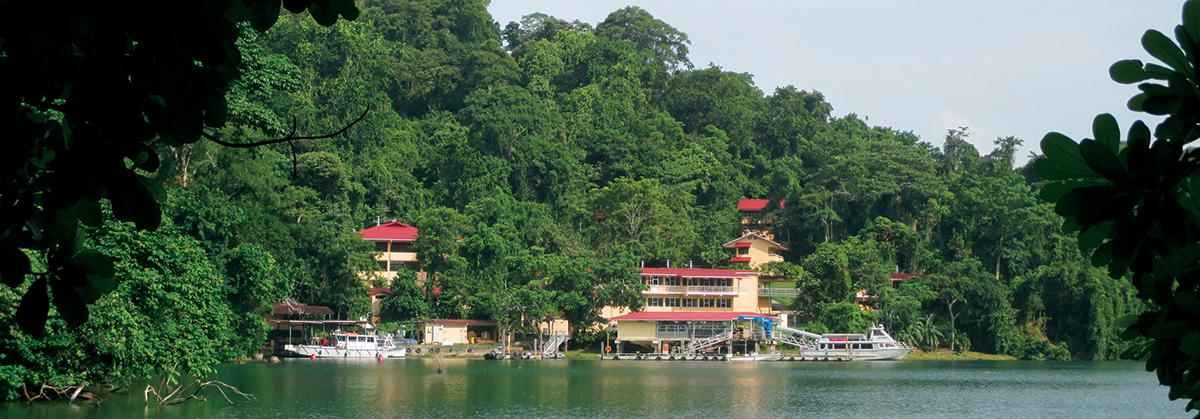
One such resource is his connection to Barro Colorado Island, an island in Panama that was formed as a result of the construction of the Panama Canal. Administered by the Smithsonian since 1946, Barro Colorado is one of the world鈥檚 most protected and distinguished areas for studying rainforest communities and ecosystems. Scientists from around the globe travel to Smithsonian Tropical Research Institute, and among them are Yanoviak and members of his team.
Tropical forests have been decimated by deforestation and development, and Barro Colorado Island provides an ideal location for Yanoviak to conduct his research. By bringing the opportunity to study there to UofL, he is not only providing a setting for world-class observation and research, he鈥檚 also able to expose his students and teammates to the leading names in biology.
鈥淪ome of the most important people in our field are people that we now know on a first-name basis. Steve encourages us to collaborate with them, and that鈥檚 a huge advantage we have here,鈥� said Gora.
Making Research Matter
Yanoviak is an unapologetic scientist. Because of this, he鈥檚 constantly thinking of new concepts to discover 鈥� a trait that he would tell you is shared among members of the scientific research community. Yanoviak has built a solid career and is a distinguished professional in his field. Now, through his teaching and mentorship, he鈥檚 passing that torch to a new generation of scientists.
But in an age of scientific commercialization, is there room for basic discovery?
Adams believes there is. 鈥淲e鈥檙e interested in research for the sake of research. Penicillin was discovered because someone was funded to study mold on oranges.鈥�
The challenge for scientists like Yanoviak is getting those outside the field to understand the importance of the subject matter. Often, gaining just a basic grasp of the fundamentals is a tall order, especially when funding is involved.
But Yanoviak is tenacious. He believes his research could lead to a discovery with major implications on how we live 鈥� or how we鈥檙e going to live. 鈥淭here鈥檚 still a lot going on in the rainforest that we don鈥檛 understand. That鈥檚 the part I like. We think we know what鈥檚 going on, but then we observe something that changes how we view the whole system. We鈥檙e seeing that climate change could be affecting the rainforest canopy, particularly lianas, right now. That gives us a basis for what to look for in the future as weather patterns continue to change.鈥�
This influential outlook is clearly evident to those who work with Yanoviak.
鈥淏asic science is the frontier that we have. Frankly, we don鈥檛 know much about the planet that we live on,鈥� said Adams.
Thankfully, there are determined researchers like Yanoviak out there learning more and more every day.