


The faculty doctors at the University of Louisville improve lives. Every day, they provide specialized care for children, perform advanced medical research and teach the next generation of physicians. That鈥檚 why families travel from across the country to work with these world-renowned physicians and researchers.
Many patients come seeking answers to their own complex medical issues. Others are voluntary participants in research projects that help to discover preventive measures and innovative cures for future patients. All together, UofL personnel work to solve the world鈥檚 most complex medical problems while also educating the physicians of tomorrow. The stories are numerous. On the following pages you鈥檒l find four that illustrate a dedication to new thinking and advanced techniques, as well as the lives they鈥檝e impacted. As medicine continues to evolve, UofL faculty doctors stand at the forefront of pediatric care.
Alex Brown & Andrew Behrman, PhD.
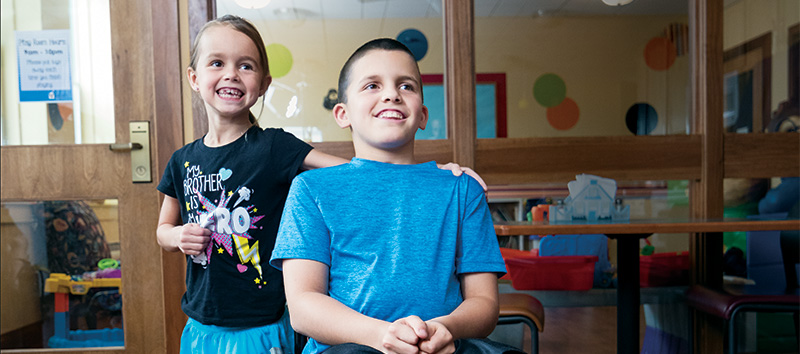
鈥淭hey were the groundbreakers of creating this program for pediatric patients, and we wanted Alex to be a part of it.鈥�
鈥擜my Brown, Alex鈥檚 mother
At age 4, Alex Brown of Pittsburgh, Pennsylvania, suffered a spontaneous spinal epidural hematoma. Despite immediate surgery, this rare condition left him paralyzed. He was hospitalized for seven months and nearly lost his life on several occasions.
Alex faced a difficult future, but his parents were determined to give him the best possible chance at recovery. After extensive online research, his mom found Andrea Behrman, PhD. Behrman is a professor in UofL鈥檚 Department of Neurological Surgery and a pioneer in the use of locomotor therapy to help kids like Alex regain mobility after spinal cord impairments. Locomotor therapy uses body weight support and a treadmill鈥攁long with assistance from numerous therapists and technicians鈥攖o help patients with spinal cord conditions practice standing and walking. The goal of this approach is to re-train patients to sit, stand and walk by themselves and to improve their overall quality of life.
For the past three summers, the Brown family has travelled from their home in Pittsburgh for treatment. Alex spends an hour every morning on the treadmill, followed by 30 minutes of sitting and standing sessions. And his progress has been impressive.
Beyond an improvement in Alex鈥檚 confidence, the locomotor therapy has helped him develop better core strength and increased leg and toe movement. When Alex first arrived, he was highly dependent on his wheelchair. But Behrman and her staff challenged him in positive ways to work hard every session.
Little by little, Alex regained motion. Now, with the support of his parents, he spends his free time in Louisville playing wheelchair tennis with UofL coach Meg Peavy, rowing on the Ohio River and having fun in the Ronald McDonald House playroom with his sister, Abby. Thanks to the advancements of Professor Behrman and her colleagues, spinal cord rehabilitation continues to break new ground for pediatric patients. And families from across the country find hope that their children will make strides and regain movement that they believed would be lost forever.
James & Kate Moons & Dr. Rahul Bhola
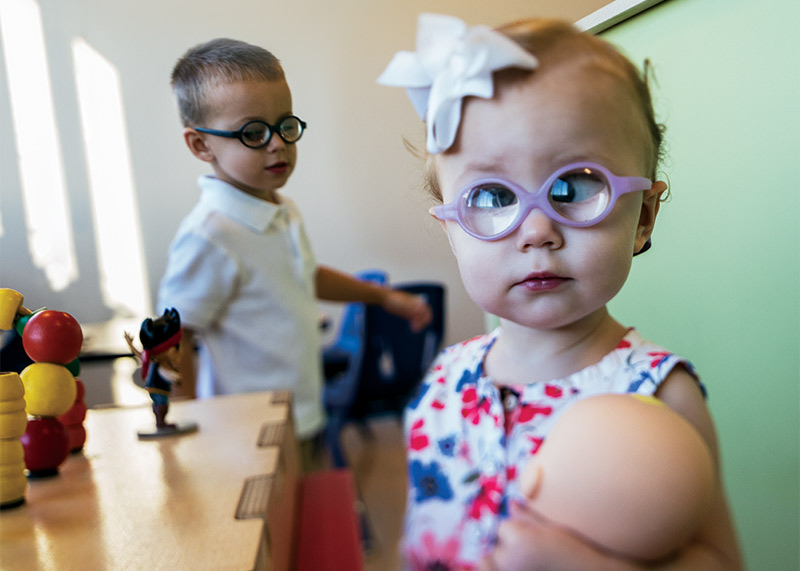
鈥淚 want them to live life without having to worry about their vision being a problem, and Dr. Bhola has definitely given them that opportunity.鈥�
鈥擫uke Moons, James鈥� and Kate鈥檚 father
Luke Moons of Albany, Kentucky, was first diagnosed with congenital cataracts when he was just four years old. This ultimately led to glaucoma during his teenage years. He underwent several procedures to implant lenses and stabilize his vision at 20/50, but he still maintains low vision to this day.
When Luke and his wife, Annie, first found out she was pregnant with their son, James, they became concerned that Luke鈥檚 condition could be hereditary. The odds of this happening were calculated at about 1 in 4.
Unfortunately, at around three months of age, James鈥� parents noticed that he was only focusing on light instead of specific objects or faces. He was beginning to show signs of the same cataracts his father had experienced. James underwent a procedure to remove the cataracts, but glaucoma soon followed.
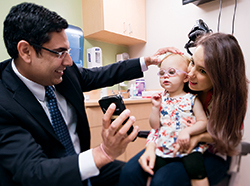
A year and half later, Kate was born. Instead of waiting for symptoms to develop, the Moons family visited their ophthalmologist only a few weeks after her birth. She was already showing signs of the same cataracts.
By the ages of 3 and 18 months, the two children had been in an operating room a combined 27 times. Their cataracts had been removed, tube shunts were placed in each eye and various other procedures attempted to save their vision. This series of events was incredibly difficult for Luke and Annie to endure. Their ophthalmologist referred the Moons family to Rahul Bhola, MD, at the University of Louisville.
Bhola鈥檚 research into a revolutionary canaloplasty procedure showed promise as an effective treatment for glaucoma in young children. He had become one of only seven in the country鈥攁nd the only ophthalmologist in Kentucky鈥攚ho was performing canaloplasty, which uses a micro catheter to open the Schlemm鈥檚 canal and drain the eye without the use of shunts.
With the children having had so many surgical procedures before, Bhola鈥檚 efforts were much more challenging. But he was able to perform the canaloplasty effectively to provide both James and Kate with excellent long-term results. The procedure immediately changed the children鈥檚 lives. While James had always been interested in books, the procedure brought those books to life. He now loves to read and can see all the pictures in detail.
And thanks to Bhola鈥檚 dedication to cutting edge techniques, UofL is being recognized as a state-of-art center for pediatric canaloplasty.
Sam Rosebrock & Dr. Kenneth Lucas
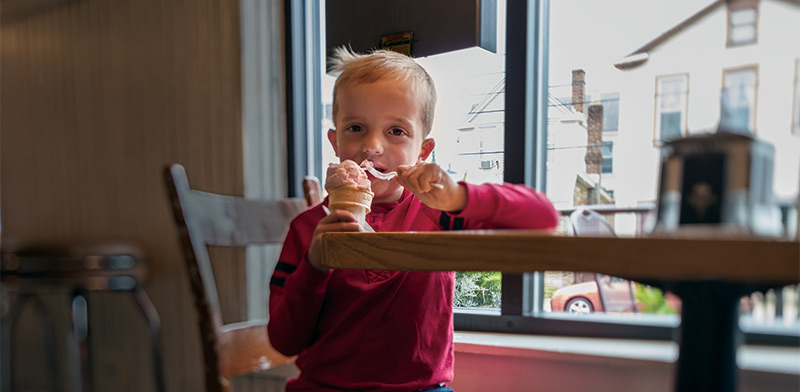
鈥淲e have to have people like Dr. Lucas who are willing to do awesome things like this. Hopefully, there will be a breakthrough for neuroblastoma.鈥�
鈥擠enielle Rosebrock, Sam鈥檚 mother
It was a typical Friday evening in Morganton, North Carolina, when 2-1/2-year-old Sam Rosebrock first felt a bellyache. He had suffered from a sore throat and few weeks, so it initially seemed to be a symptom of the antibiotics he was taking.
But the next morning, after his family noticed that his abdomen was distended and the pain had increased, they immediately visited their pediatrician.
The Rosebrocks were told to drive鈥攚ithout stopping鈥攖o Levine Children鈥檚 Hospital in Charlotte.
The family was met at the emergency room by surgeons who quickly identified a tumor that they believed to be cancerous. After further testing, it was determined that Sam had Stage 4 neuroblastoma, meaning that the cancer had spread to his bone marrow.
After several rounds of chemotherapy, his cancer responded and the tumor had shrunk to the point where a surgical procedure to remove it was possible. Sam endured more chemo and radiation treatments, and ultimately went into remission.
Three months later, Sam relapsed.
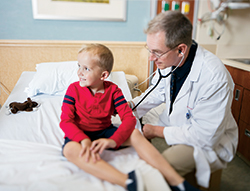
It was a difficult phone call for the family to receive. Even though he was responding well to another round of chemo, his parents knew that Sam would likely suffer another relapse in the future. He was now considered high risk. So his family began researching clinical trials across the country that might help their son. Their oncologist recommended Ken Lucas, MD, at the University of Louisville, whose vaccination trials were experiencing positive outcomes with fewer side effects than similar trails.
Lucas鈥� work targets children whose tumors have relapsed and who have very poor prognoses. Sam was an ideal candidate.
The trial鈥檚 approach uses low doses of chemotherapy before administering a cancer vaccine. This makes the cancer cells more susceptible to being killed by the patient鈥檚 immune cells. To create the vaccine, cells are harvested, then genetically modified to fight the neuroblastoma.
This protocol is unique among other pediatric cancer vaccine programs across the country. Sam鈥檚 results have been very positive. His scans in October show that he is still in remission. Now this resilient, ice-cream-loving 5-year-old continues to participate in preventive trials at UofL. Sam鈥檚 hope is that a cure will be discovered some day to help other kids with neuroblastoma.
Gillian Sparks & Dr. Kupper Wintergerst
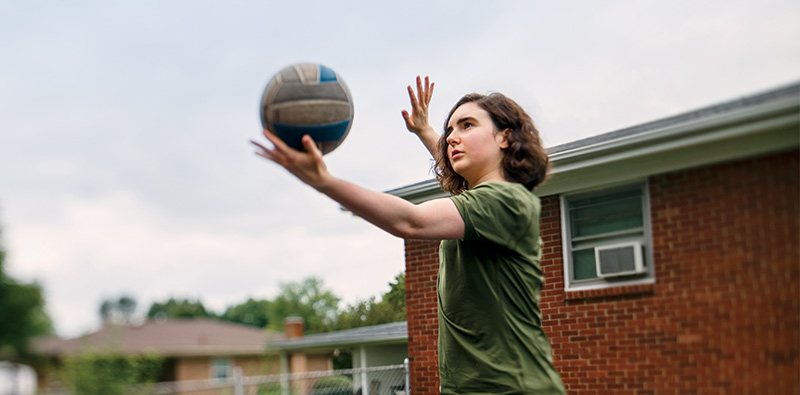
鈥淚 wish I could be a patient there. They are so wonderful, and they treat us like family.鈥�
鈥擩ennifer Sparks, Gillian鈥檚 mother and a Type 1 diabetic
聽At 14, Gillian Sparks of Louisville, Kentucky, was diagnosed with Type 1 diabetes.
Her mother, Jennifer鈥攁lso a Type 1 diabetic since the age of 14鈥攚as surprised. She had always been vigilant about monitoring both of her daughters for any signs of the disease, and was growing confident that they wouldn鈥檛 share her experience.
While Jennifer was aware that her condition can be hereditary, Gillian had shown no symptoms. In fact, she was living a healthy, active, teenage lifestyle, complete with dance classes and frequent volleyball games.
But routine tests at their pediatrician鈥檚 office detected the disease extremely early. Gillian actually was diagnosed before losing pancreatic function, which is very rare in most Type 1 diabetes patients.
Her mother immediately contacted Kupper Wintergerst, MD, a leading endocrinologist at the University of Louisville, to help Gillian manage her condition.
Dr. Wintergerst participates in TrialNet, which conducts clinical trials in over 100 centers worldwide to further research prevention and treatment of diseases. In Kentucky, UofL stands as the only pediatric TrialNet center for Type 1 diabetes.
Gillian agreed to take part in a research trial that is studying patient heredity. Her unique situation鈥攈aving a mother with Type 1 diabetes and being diagnosed so early鈥攎ade her an ideal candidate.
Wintergerst hopes to uncover exactly how the disease is passed from parent to child. This study could reveal preventive measures to help moms like Jennifer feel confident that their children would no longer be at risk.
In the meantime, Gillian is learning to adapt to her new lifestyle. Wintergerst has shown her ways she can still enjoy the foods she loves, participate in her favorite activities and feel like a normal teenager.
Jennifer can already see significant differences in how the disease is treated now, compared to when she was first diagnosed.
The Sparks family is highly complimentary of Wintergerst and his staff for providing the resources, support, guidance and鈥攈opefully in the future鈥攖he path to a cure for patients with Type 1 diabetes.